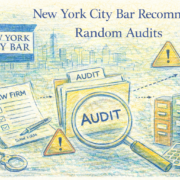
New York City Bar Recommends Random Audits

NYC Bar Report Urges Random Trust-Account Audits in New York

The New York City Bar Association’s Professional Discipline Committee released a policy paper on July 8, 2025 titled Evaluating Trust Account Oversight Mechanisms. The report focuses on whether New York should implement a proactive compliance tool that is used in a number of other jurisdictions: random audits of attorney trust accounts. (The report notes that the First and Second Departments already have rules authorizing a random audit program, but no such program has been implemented.)

Few, if any, professional obligations are as clear as the duty to safeguard client funds. The report explains that many states regulate this area beyond the text of the rules of professional conduct by adopting loss detection and prevention mechanisms. In New York, two commonly cited tools are: (1) payee notifications by insurers in third-party liability settlements and (2) dishonored check/overdraft reporting by banks. The report argues that a third tool—random audits—can strengthen deterrence and improve compliance through education, even though random audit programs are sometimes viewed as costly or logistically difficult.

The report describes the current New York model as largely reactive. Trust account reviews are typically triggered by a complaint (often from a client) or by the Grievance Committee’s receipt of a dishonored check or overdraft notice from a bank. A “typical audit,” the report explains, involves review of a period of bank and bookkeeping records—such as bank statements, canceled checks, deposited items, and the attorney’s general ledger—and may reveal anything from technical recordkeeping failures under Rule 1.15(d) to serious defalcations.

By contrast, a random audit program involves compliance reviews that are not triggered by suspicion. The report explains that “random” simply means there are no specific indications of wrongdoing prompting the review. The report outlines what regulators commonly request at the outset, including: a trust receipt/disbursement journal or general ledger, bank statements, canceled checks, deposited items, individual client ledgers, and a three-way reconciliation (adjusted bank balance, general ledger/journal balance, and the total of client ledger balances). If the summary-level review reflects compliance, the regulator typically does not pursue a forensic reconstruction; if red flags appear (e.g., negative balances or checks payable to cash), the review can become more intensive.

As comparative support, the report surveys audit programs in other states and discusses models that emphasize education, deterrence, and detection. For example, New Jersey’s Random Audit Compliance Program is described as a mature and well-funded system that conducts hundreds of audits annually and frequently routes deficient lawyers into an education/diversion track rather than immediately into discipline, while still referring serious misconduct for prosecution. North Carolina’s program is described as heavily education-oriented, publishing recurring audit findings and using the results to target training and monitoring for firms with significant deficiencies. Connecticut’s program is described as unusually granular, with “drill down” testing that compares bank items to journals and client ledgers and requires a three-way reconciliation as part of the review.

The report also highlights New York-specific incentives to consider a pilot program. It notes that the New York Lawyers’ Fund for Client Protection approved 94 awards totaling $11.6 million in 2024 and emphasizes that large categories of losses have been tied to escrow and settlement proceeds. The report argues that, without a proactive audit program, neither deterrence nor improved compliance will be maximized—and that even a pilot program would be a meaningful step given the existing authority in the First and Second Departments’ rules.

The First and Second Judicial Departments of the Appellate Division have rules in place authorizing the creation and implementation of a random audit program, but no such program has been put in place.

For lawyers and firms, the practical takeaway is that “audit readiness” is not exotic—it is the same discipline that prevents errors and reduces risk: consistent three-way reconciliations, accurate client ledgers, clear source/purpose documentation for every trust transaction, and systems that prevent obvious red flags (e.g., checks to cash, unexplained electronic withdrawals, or persistent stale items). If New York moves toward a pilot random audit program, those basics will matter more than ever.

Source: New York City Bar Association, “Evaluating Trust Account Oversight Mechanisms” (July 8, 2025).

Attorney escrow agent’s misconduct leads to discipline

In Matter of Grant, the First Department disciplined an attorney based upon escrow-related misconduct. Respondent’s conviction arose from his participation in a scheme whereby victims paid advance fees for fraudulent standby letters of credit (SBLCs) issued by fake banks.

Between 2014 and 2019, respondent acted as escrow agent in these transactions and accepted advance fees from the victims which he was to hold in his escrow account pending issuance of the SBLC. Pursuant to an agreement, he was not to wire the funds out of the account until the victim received the SBLC. Nevertheless, respondent ignored this contractual duty and he immediately wired the victims’ monies to his co-conspirators. In addition, he misappropriated $316,699 in law client funds from his attorney escrow account. As part of his sentence, respondent was directed to pay restitution of $4.8 million to the victims of the SBLC scheme (for which he was jointly and severally liable with two other defendants) and $316,699 to the law client, and to forfeit the $160,000 he personally earned from the SBLC scheme.

In imposing disbarment, the First Department noted that:

This Court’s precedent makes clear that “[a]bsent extremely unusual mitigating circumstances,” which the Referee did not find in this case, intentional conversion of client or third-party funds warrants disbarment (Matter of Lubell, 190 AD2d 479, 481 [1st Dept 1993]; see also Matter of Bernier, 177 AD3d 37 [1st Dept 2019]; Matter of Bloomberg, 154 AD3d 75 [1st Dept 2017]; Matter of Ballner, 140 AD3d 115 [1st Dept 2016]; Matter of Babalola, 139 AD3d 61 [1st Dept 2016]).

Mount Vernon attorney resigns due to escrow-related misconduct.

In Matter of Thomas, the Second Department accepted the resignation of an attorney due to two investigations by the Grievance Committee for the Ninth Judicial District. These investigations involved allegations of the willful misappropriation of client funds in the amount of $50,000 held on behalf of one client and $188,000 held on behalf of another client, as well as the making of cash withdrawals from his escrow account and the failure to maintain required bookkeeping records for this account.

Attorney’s personal use of funds for transcript results in discipline.

The attorney in Matter of Castro faced 11 charges of professional misconduct. These charges include neglect of a legal matter, misappropriation of client funds, commingling personal funds with client funds, using client funds for personal expenses without permission, failing to obey a court judgment, recording a court proceeding without seeking court approval, and entering into a loan transaction with a client without giving required advisories and obtaining informed consent. After a hearing, a referee found that seven of the charges were sustained and recommended disbarment.

The charges against the attorney arose from three separate matters. In the first matter, he was retained to file a notice of appeal on behalf of a client and tasked with obtaining trial transcripts. The client gave him a check for $3,500 specifically earmarked for the transcripts, but the attorney deposited the check into his business account and used the funds for personal expenses without paying for the transcripts. In the second matter, the attorney was retained to represent a client in a foreclosure action and received a $10,000 retainer. He used $5,000 of the retainer to pay personal expenses and did not use the remaining funds for the client’s case. In the third matter, the attorney entered into a loan transaction with a client, borrowing $15,000 without giving required advisories or obtaining the client’s informed consent.

The Attorney Grievance Committee recommended disbarment, while the attorney asked for a public censure. The Court ultimately granted the AGC’s petition, ordered the attorney’s disbarment, and ordered him to make restitution to the clients affected by his misconduct in the amount of $18,500 and to pay the costs of the proceedings.

Employee vs. Independent Contractor: Understanding the Key Differences for Law Firms

In the legal industry, the decision to classify legal professionals as employees or independent contractors can have significant implications for both law firms and the lawyers themselves. This classification affects various aspects, including tax liabilities, benefits, and legal protections. In this post, we will explore the key differences between employees and independent contractors in the context of employing lawyers and provide guidance for law firms to make informed decisions.

The Importance Of Accurate Classification


Proper classification of legal professionals is essential for law firms to avoid potential legal and tax consequences. For example, if a law firm mistakenly classifies a lawyer as an independent contractor when they should be an employee, the firm may face fines and penalties for failing to withhold and pay the appropriate employment taxes. Additionally, the misclassified lawyer may be denied certain legal protections and benefits, such as overtime pay, which could result in lawsuits against the firm.

Misclassification can also have significant consequences for the legal professionals themselves. For instance, an employee misclassified as an independent contractor may be left without access to essential benefits like health insurance and retirement plans, as well as lacking the legal protections afforded to employees, such as anti-discrimination and workplace safety regulations. This not only impacts the individual lawyer but can also damage the reputation of the law firm and potentially affect client relationships.

To avoid these consequences, law firms should consult with legal and financial experts to ensure compliance with federal, state, and local regulations. By conducting regular reviews of their workforce classifications and seeking expert guidance, law firms can minimize the risk of misclassification, maintain compliance, and safeguard their business interests as well as the welfare of their legal professionals.

The Key Differences Between Employees and Independent Contractors


The New York Department of Labor notes that the “courts have found that no single factor or group of factors conclusively define an employer-employee relationship. Rather, all factors are reviewed to determine the degree of supervision, direction and control exercised over the services. Generally, an employer controls what will be done, i.e. the manner, means, and results.” Some of the factors include:

1. Control Over Work

Employees:

  • The law firm has significant control over the work, including the scope of work, hours, and methods employed.
  • Lawyers are typically required to adhere to firm policies and procedures.
  • Law firms are responsible for providing the necessary resources and tools for their employees to perform their work.

Independent Contractors:

  • Lawyers have more control over the work, often choosing their clients, hours, and methods employed.
  • They generally have more flexibility in terms of work arrangements and are not subject to firm policies and procedures.
  • Independent contractors are responsible for providing their tools and resources for their work.

2. Tax Implications

Employees:

  • Law firms are responsible for withholding and paying employment taxes, such as Social Security, Medicare, and federal and state income taxes.
  • Employees are eligible for certain tax deductions and benefits, such as employer-sponsored retirement plans and health insurance.

Independent Contractors:

  • Lawyers are responsible for their own taxes, including self-employment taxes, and must make estimated tax payments throughout the year.
  • Independent contractors may have more opportunities for tax deductions related to their business expenses but may not have access to the same employer-sponsored benefits.

3. Benefits and Protections

Employees:

  • Law firm employees are generally eligible for various benefits, such as health insurance, retirement plans, and paid time off.
  • Employees are protected under federal and state labor laws, including minimum wage, overtime pay, and anti-discrimination protections.

Independent Contractors:

  • Lawyers classified as independent contractors are not eligible for employer-sponsored benefits and must secure their own health insurance and retirement plans.
  • Independent contractors are not covered by most labor laws and may have limited legal protections in comparison to employees.

DOL Factors

According to the New York Department of Labor:

An employer-employee relationship may exist if you:

  • Choose when, where, and how they perform services
  • Provide facilities, equipment, tools, and supplies
  • Directly supervise the services
  • Set the hours of work
  • Require exclusive services (An individual cannot work for your competitors while working for you.)
  • Set the rate of pay
  • Require attendance at meetings and/or training sessions
  • Ask for oral or written reports
  • Reserve the right to review and approve the work product
  • Evaluate job performance
  • Require prior permission for absences
  • Have the right to hire and fire

How an individual is compensated is another indicator of worker status. Employees typically are paid a salary, an hourly rate of pay, or a draw against future commissions with no requirement for repayment of unearned commissions. Employees may also receive certain fringe benefits, including an allowance or reimbursement for business or travel expenses.

The nature of the services performed is also key to deciding if a worker is an employee or an independent contractor.

Unskilled or casual workers are usually employees because their labor is often supervised. However, even professionals such as doctors and lawyers, who have much freedom to perform their duties, may be employees if they are subject to significant control.

The courts have also found that workers may be employees and that an employment relationship may exist if the employer controls important aspects of the services performed, other than results and means.

https://dol.ny.gov/independent-contractors

Considerations for Law Firms


When determining whether to classify a lawyer as an employee or independent contractor, law firms should consider the following factors:

  • Degree of control over the work
  • Financial relationship between the firm and the lawyer
  • Nature of the work and its integration with the firm’s core business

It is crucial for law firms to properly classify their legal professionals to avoid potential legal and tax consequences. Misclassification can lead to fines, penalties, and potential lawsuits. Consult with legal and financial experts to ensure compliance with federal, state, and local regulations.


The classification of lawyers as employees or independent contractors plays a significant role in the financial and legal aspects of law firm management. By understanding the key differences and considering the specific circumstances of each legal professional, law firms can make informed decisions that align with their business objectives and comply with applicable regulations.

Please note that the information provided on this website is for general informational purposes only and is not intended as legal or tax advice. The information is subject to change, and it is important to consult a specialist before making any decisions. Law Ledgers provides accounting services to New York lawyers and law firms, including escrow protection, tax advice and bookkeeping administration. Contact us today for personalized support.

Navigating Tax Deductions for Law Firms

Tax planning is an essential aspect of managing your law firm’s finances. By understanding and taking advantage of available tax deductions, you can minimize your tax liability and maximize your firm’s financial health. In this blog post, we’ll explore key tax deductions relevant to law firms and provide guidance on how to leverage these opportunities to boost your bottom line.

Operating Expenses

  • Office supplies and equipment
  • Rent or mortgage interest
  • Utilities and maintenance
  • Professional fees and memberships

Operating expenses, which are typically tax-deductible, play a crucial role in the day-to-day operations of your law firm. These ordinary and necessary expenses encompass a wide range of items that keep your practice running smoothly. For example, office supplies such as paper, ink, and stationery, as well as equipment like computers, printers, and furniture, are all necessary for maintaining a functional work environment. Additionally, costs associated with your office space, such as rent or mortgage interest, utilities, and maintenance, contribute to creating a comfortable and efficient workspace for your team.

Another category of tax-deductible operating expenses involves professional fees and memberships. As an attorney, staying current on industry trends, regulations, and best practices is essential. This often requires participating in bar associations, attending conferences, and subscribing to legal publications. These membership fees and subscriptions not only help you stay informed but also provide valuable networking opportunities and resources to enhance your legal practice. By investing in these professional development activities, you can improve your firm’s credibility, attract new clients, and foster growth.

To maximize your deductions and ensure accurate reporting, it’s vital to maintain detailed records of all operating expenses. This includes keeping receipts, invoices, and other relevant documentation that can substantiate your claims. Adopting an organized record-keeping system not only simplifies tax filing but also allows you to track your expenses more effectively, enabling you to identify opportunities for cost savings and better manage your firm’s financial health. By taking advantage of these tax deductions and maintaining meticulous records, you can reduce your tax liability and invest in your law firm’s continued success.

Employee Salaries and Benefits

  • Wages and bonuses
  • Retirement plan contributions
  • Health insurance premiums
  • Continuing education expenses

Employee salaries and benefits are another key area for tax deductions. Wages, bonuses, retirement plan contributions, health insurance premiums, and continuing education expenses for your employees can all be deducted as business expenses. Ensuring that these costs are accurately accounted for can significantly reduce your firm’s tax liability.

Travel and Entertainment Expenses

  • Transportation and lodging
  • Meals and entertainment for business purposes
  • Conference and seminar fees

Travel and entertainment expenses can be tax-deductible if they are incurred for business purposes. Deductible expenses may include transportation and lodging, meals and entertainment, and conference and seminar fees. Be sure to maintain detailed records and receipts to substantiate these deductions and comply with IRS requirements.

Depreciation and Section 179 Expensing

  • Office furniture and equipment
  • Vehicles used for business purposes
  • Software and technology investments

Depreciation and Section 179 expensing allow you to deduct the cost of certain assets over time or all at once, respectively. Eligible assets may include office furniture and equipment, vehicles used for business purposes, and software and technology investments. Consult with a tax professional to determine the best approach for your law firm’s unique circumstances.

Home Office Deduction

  • Exclusive and regular use for business
  • Proportional expenses, such as rent, utilities, and maintenance

If you operate your law firm from a home office, you may qualify for the home office deduction. To claim this deduction, your home office must be used exclusively and regularly for business purposes. You can deduct a proportion of your home expenses, such as rent, utilities, and maintenance, based on the square footage of your home office.

Navigating tax deductions for law firms can be complex, but with proper planning and record-keeping, you can maximize your savings and boost your firm’s financial health. By understanding and leveraging the tax deductions available to your firm, you can minimize your tax liability and invest in your firm’s growth and success.

If you need expert guidance on tax planning tailored to your law firm’s unique needs, Law Ledgers is here to help. Contact us today for personalized support and solutions.

Six Tips For Law Firm Cash Flow Management

Managing cash flow is critical for the success and growth of any business, and law firms are no exception. Ensuring steady revenue streams and maintaining financial stability allows your firm to meet its obligations, invest in growth opportunities, and weather unforeseen challenges. In this post, we’ll explore essential cash flow management strategies tailored for law firms, helping you optimize your financial planning and secure your firm’s future success.

Partnering with outside experts like Law Ledgers can significantly improve your law firm’s cash flow management by leveraging our expertise, allowing you to focus on providing legal services. With in-depth knowledge of accounting principles, best practices, and familiarity with the unique financial challenges faced by law firms, Law Ledgers can implement tailored cash flow management strategies to optimize your firm’s financial performance. Outsourcing your cash flow management not only frees up time for attorneys to focus on billable work and client relations but also streamlines financial processes, reducing the administrative burden on your firm and eliminating the need for costly in-house accounting resources.

1. Accurate Financial Forecasting

  • Analyzing historical financial data
  • Regularly updating financial projections
  • Anticipating potential changes in the market

The foundation of effective cash flow management lies in accurate financial forecasting. Accurate forecasting involves a thorough analysis of your law firm’s historical financial data, including revenue trends, expense patterns, and seasonal fluctuations in demand for legal services. By gaining a comprehensive understanding of your firm’s past performance, you can make informed predictions about future cash inflows and outflows, allowing you to plan proactively and make strategic decisions for the growth of your practice.

Regularly updating financial projections is another crucial aspect of effective cash flow management. As new financial data becomes available, it’s essential to update your forecasts to reflect the most current information. This may include adjusting your revenue and expense projections based on recent client acquisitions, changes in billing rates, or shifts in market conditions. By continually refining your financial forecasts, you can better anticipate potential changes in the market and make timely adjustments to your strategies.

A proactive approach to financial forecasting enables you to stay ahead of potential cash flow issues and maintain financial stability. By closely monitoring your firm’s financial health and using data-driven insights to inform your decision-making, you can identify and address any emerging cash flow challenges before they escalate into more significant problems. This, in turn, helps ensure the long-term success and sustainability of your law practice. In addition, by regularly sharing financial forecasts with your team, you can foster a culture of financial transparency and accountability, empowering everyone to contribute to the firm’s overall financial performance.

2. Timely and Efficient Billing

  • Streamlining the invoicing process
  • Setting clear payment terms and expectations
  • Utilizing technology for billing and collections

Ensuring a steady revenue stream requires a timely and efficient billing process. Streamlining invoicing can be achieved by utilizing technology and setting clear payment terms and expectations with clients from the outset. Embracing modern billing systems and software can automate various aspects of the invoicing process, reducing manual work and the potential for errors. Establishing clear communication with clients about payment expectations helps prevent misunderstandings and fosters a positive working relationship.

Prompt and accurate billing not only improves cash flow but also fosters trust and positive relationships with your clients. When clients receive consistent and accurate invoices, they are more likely to perceive your law firm as professional and reliable. This trust and rapport can lead to long-term client relationships and an enhanced reputation for your firm.

Useful tips for effective billing:

  • Establish a consistent billing schedule to ensure timely invoicing
  • Clearly outline payment terms and conditions in client engagement agreements
  • Provide itemized invoices with detailed descriptions of services rendered
  • Offer various payment options, such as credit card, electronic funds transfer, or online payment portals, to make it convenient for clients to pay
  • Follow up on overdue payments promptly and professionally
  • Regularly review and adjust your billing practices based on client feedback and industry best practices

3. Managing Accounts Receivable

  • Monitoring outstanding invoices
  • Implementing a proactive collection strategy
  • Offering incentives for early payment

Effectively managing accounts receivable is crucial for maintaining a healthy cash flow. Monitor outstanding invoices and implement a proactive collection strategy to minimize overdue payments. Offering incentives for early payment, such as a small discount or flexible payment terms, can encourage clients to settle their accounts promptly.

4. Controlling Overhead Expenses

  • Regularly reviewing and adjusting expenses
  • Implementing cost-saving measures
  • Outsourcing non-core functions

Controlling overhead expenses is an essential aspect of cash flow management. Regularly review and adjust expenses, implementing cost-saving measures where possible. Consider outsourcing non-core functions, such as accounting or IT, to reduce overhead costs and improve efficiency.

5. Maintaining a Cash Reserve

  • Establishing an emergency fund
  • Planning for unexpected expenses
  • Ensuring access to credit or financing options

Establishing a cash reserve can provide a financial safety net for your law firm in times of need. Plan for unexpected expenses by setting aside funds in an emergency account, and ensure access to credit or financing options if required. A cash reserve can offer peace of mind and financial stability in the face of unforeseen challenges.

6. Regular Financial Analysis and Reporting

  • Monitoring key financial metrics
  • Identifying trends and potential issues
  • Adjusting strategies based on data-driven insights

Regular financial analysis and reporting enable you to monitor key financial metrics and identify trends and potential issues. By adjusting strategies based on data-driven insights, you can optimize cash flow management and drive your law firm’s growth and success.

Effective cash flow management is crucial for law firms looking to thrive in an increasingly competitive market. By implementing these strategies, you can ensure steady revenue streams and maintain financial stability, positioning your firm for continued success. If you’re seeking expert guidance on cash flow management tailored to the unique needs of your legal practice, our team at Law Ledgers is here to help. Contact us today for personalized support and solutions.

Please note that the information provided on this website is for general informational purposes only and is not intended as legal or tax advice. The information is subject to change, and it is important to consult a specialist before making any decisions. Law Ledgers provides accounting services to New York lawyers and law firms, including escrow protection, tax advice and bookkeeping administration. Contact us today for personalized support.
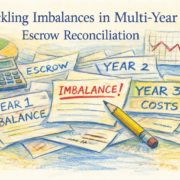
Tackling Imbalances in Multi-Year Escrow Reconciliation

Expert Solutions for Navigating the Challenges of Escrow Account Discrepancies

At Law Ledgers, we understand the unique financial challenges that legal professionals face, particularly when managing client funds in escrow accounts. One such challenge is the reconciliation of multi-year escrow accounts when the balance is off. In this post, we will explore the complications associated with escrow account imbalances and share effective strategies to resolve these issues with minimal disruption to your legal practice.

Identifying the Root Cause of the Escrow Account Imbalance

  • Misallocated funds
  • Clerical errors
  • Unauthorized transactions

The first step in resolving an escrow account imbalance is identifying the root cause of the discrepancy. Identifying the source of the problem is crucial, as it determines the appropriate corrective action and helps prevent future occurrences. One of the most common causes of discrepancies is misallocated funds. This issue can arise when funds are inadvertently deposited into the wrong account or allocated to the wrong client. For example, an attorney may mistakenly deposit funds intended for Client A into Client B’s account, creating a discrepancy in both clients’ balances. In such cases, it’s essential to review all deposit and disbursement transactions to ensure the funds are correctly assigned to the respective clients.

Another prevalent cause of escrow account imbalances is clerical errors. These mistakes can range from simple data entry errors, such as transposing digits or omitting decimal points, to more complex issues like double-posting transactions or failing to record a transaction altogether. When reviewing your account records, pay close attention to the details of each transaction, including dates, amounts, and descriptions. It’s also essential to cross-reference your records with bank statements to identify any discrepancies that may have resulted from miscommunication between the bank and your office. Under the New York Rules of Professional Conduct, Rule 1.15 mandates that attorneys maintain complete and accurate records of client property and perform regular reconciliations.

Unauthorized transactions are another potential cause of escrow account imbalances. These transactions can occur due to fraudulent activities, such as identity theft, embezzlement, or phishing scams, which could lead to unauthorized withdrawals or deposits. To detect and prevent unauthorized transactions, it’s crucial to have stringent security measures in place, such as strong passwords, multi-factor authentication, and regular monitoring of account activity. If you discover an unauthorized transaction, it’s essential to report the issue to the bank and relevant authorities promptly.

Implementing Systematic Escrow Account Reconciliation Processes

  • Periodic account reconciliation
  • Utilizing accounting software
  • Segregating duties

To prevent future imbalances, it’s essential to establish a systematic reconciliation process. This includes conducting periodic escrow account reconciliations, working with accounting professionals to automate the process, and segregating duties to ensure checks and balances. These practices can help identify potential discrepancies early on, preventing them from snowballing into more significant issues over time.

Multi-Year Escrow Reconciliation
By meticulously reviewing your account records and being mindful of the common causes of discrepancies, you can pinpoint the source of the error and take corrective action.

Engaging Expert Assistance

  • Enlisting a professional accountant
  • Consultation and advisory services
  • Compliance with legal and ethical obligations

In complex cases, enlisting the help of a professional accountant, like our team at Law Ledgers, can be invaluable. Our expert consultation and advisory services will ensure that your escrow accounts are reconciled accurately, while also ensuring compliance with legal and ethical obligations. With our specialized knowledge of the legal industry, we can offer tailored solutions to address the specific needs of your practice.

Establishing Clear Communication Channels

  • Communicating with clients
  • Transparency and trust
  • Proactive problem-solving

Another crucial aspect of resolving escrow account reconciliation imbalances is clear communication with your clients. By being transparent about any discrepancies and proactively addressing their concerns, you can maintain trust and effectively resolve issues as they arise.

Adopting Preventative Measures

  • Regular training and education
  • Robust internal controls
  • Continuous improvement

Lastly, adopting preventative measures can help mitigate the risk of future escrow account imbalances. This includes providing regular training and education for your team, implementing robust internal controls, and fostering a culture of continuous improvement. By taking a proactive approach, you can minimize the likelihood of encountering multi-year escrow reconciliation complications in the future.


At Law Ledgers, we understand the importance of accurate escrow account management for legal professionals. Our team is dedicated to helping you navigate the complexities of multi-year escrow reconciliation, ensuring that your accounts are always balanced and compliant with industry regulations. If you’re struggling with escrow account imbalances or need assistance in implementing best practices, contact our team of experts today for personalized guidance and support.

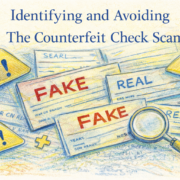
Identifying and Avoiding The Counterfeit Check Scam

The legal community is not immune to the ever-present threat of fraud, and lawyers must remain vigilant in identifying and avoiding transactions that may involve counterfeit checks. This is the key message of the 2021 Formal Ethics Opinion 2 from the North Carolina State Bar, which discussed a lawyer’s professional responsibility to safeguard entrusted funds.

The fraudulent use of counterfeit checks is not a new issue facing the legal community, and state and federal agencies have issued warnings to the public about the existence and persistence of these scams. National and state bar associations, regulatory bodies, and malpractice carriers have also reported on the prevalence of such scams, which frequently target members of the legal profession.

Thus, lawyers must be alert to the potential for fraud in both the representation and the receipt and disbursement of funds. They have a professional responsibility to investigate and verify the authenticity of transactions, especially those involving unfamiliar or out-of-country entities, to safeguard the entrusted funds of their clients. By remaining vigilant and taking the necessary precautions, lawyers can help protect themselves and their clients from falling prey to counterfeit check scams.

What is a Counterfeit Check Scam?

A counterfeit check scam is a common form of fraud that has been around for a long time. In a typical scenario, a scammer sends a fake check to an unsuspecting lawyer, usually for an amount that is much higher than what the victim is expecting. The scammer then asks the lawyer to deposit the check and send back the excess funds. The check bounces, and the lawyer is left with no funds and, in some cases, may even face legal repercussions.

Counterfeit check scams can have devastating effects on law firms, as they can result in significant financial losses and damage to the firm’s reputation. Some examples of how counterfeit check scams can specifically impact law firms include:

  • Law firms may be targeted by scammers posing as potential clients, who send fake checks as retainers for legal services. The scammer will then ask the firm to wire a portion of the funds back to them, leaving the firm responsible for repaying the bank the full amount of the fake check.
  • Scammers may target law firms that handle large financial transactions, such as real estate closings, by sending fake checks to cover the closing costs. The firm may then be asked to wire a portion of the funds back to the scammer, leaving the firm liable for the full amount of the fake check.
  • Law firms may also be targeted by scammers posing as vendors or service providers, who send fake checks as payment for services rendered. The scammer will then ask the firm to wire a portion of the funds back to them, leaving the firm responsible for repaying the bank the full amount of the fake check.

For example, the New York City Bar Association’s Formal Opinion 2015-3: Lawyers Who Fall Victim to Internet Scams discussed an example of a “typical scam”:

A common example of the internet-based scam begins with an email from an individual requesting assistance with an urgent transactional or litigation matter (the “email sender”). This email sender is generally located abroad, whereas the counterparty or adversary is usually located in the attorney’s jurisdiction. The email sender often proposes a contingency fee arrangement whereby the attorney would receive a percentage of the transaction total or litigation settlement.  If the attorney sends a draft engagement letter, the email sender swiftly executes it. Soon thereafter, the email sender notifies the attorney that transaction has been consummated or the litigation has settled. As a result, the attorney performs little or no work before the engagement ends.

The attorney receives the closing or settlement check quickly. The attorney then deposits the check in the law firm’s trust account and, once the check has “cleared,” the attorney transfers his contingent fee into his operating account and wires the remainder of the funds to a foreign bank account designated by the email sender. Unfortunately, the attorney might not realize that a bank can “clear” a check and make the funds available before the bank actually collects the funds. The bank may take weeks or even months to discover that the check is fraudulent. When that happens, the bank will notify the attorney that the check was fraudulent.

If the trust account contains the funds of other clients, then those clients may be harmed because the bank may use those funds to cover all or part of the wire transfer.  If the trust account contains no other client funds (or if the client funds are insufficient to cover the full amount of the wire transfer), then the bank will notify the attorney that his trust account is overdrawn, and will look to the attorney or the law firm to make up the deficiency. 

In order to protect themselves from counterfeit check scams, law firms should take steps such as verifying the legitimacy of clients and vendors, being cautious of unsolicited offers, and thoroughly examining any checks received before depositing them.

A Lawyer’s Responsibility in Identifying and Avoiding Counterfeit Checks

As a lawyer, you have a duty of competency and diligence in representing your clients. This means that you must have the necessary legal knowledge, skill, thoroughness, and preparation reasonably necessary for the representation. You are also required to keep abreast of changes in the law and its practice, including the benefits and risks associated with the technology relevant to your practice, engage in continuing study and education, and comply with all continuing legal education requirements to which you are subject.

The recent ethics opinion issued by the North Carolina State Bar highlights a lawyer’s responsibility in identifying and avoiding counterfeit checks. The opinion addresses a scenario where a lawyer received a cashier’s check from a third party drawn on an out-of-country bank without investigating the authenticity of the check.

Specifically, the opinion addressed a situation where a lawyer received an unsolicited communication from a client seeking to collect debt from a third party. Despite not soliciting the client’s business, the lawyer agreed to file a lawsuit against the third party based on the documentation provided. Shortly thereafter, the third party reached out to the lawyer and expressed a desire to pay the debt without litigation. The lawyer subsequently received a cashier’s check from the third party, which was drawn on a foreign bank and dated prior to the earlier conversation. However, the lawyer did not investigate the authenticity of the check, nor did they conduct any further investigation into the third party.

The North Carolina State Bar’s opinion finds that the lawyer’s failure to investigate the foreign bank cashier’s check was a violation of their duties of competence and diligence under the Rules 1.1 and 1.3 of the Rules of Professional Conduct. A lawyer’s duty of competency requires them to possess the necessary legal knowledge, skill, thoroughness, and preparation reasonably necessary for the representation. Comment 8 to Rule 1.1 further emphasizes the importance of keeping abreast of changes in the law and its practice, including the benefits and risks associated with technology relevant to the lawyer’s practice.

How to Avoid Falling Victim to a Counterfeit Check Scam

Generally, to avoid falling victim to a counterfeit check scam, there are several steps that you can take:

  1. Be cautious of unsolicited communications from potential clients.
  2. Conduct thorough investigations of potential clients and third parties.
  3. Verify the authenticity of any cashier’s checks, particularly those drawn on out-of-country banks.
  4. If you suspect that you have received a counterfeit check, contact your bank immediately.
  5. Report any suspected fraudulent activity to the appropriate authorities, including your state bar association.

Watch Out For Red Flags

    More specifically, the New York City Bar Opinion notes that lawyers should be on alert for certain “red flags” that may signal fraud, such as:

    • The email sender is based abroad.
    • The email sender does not provide a referral source. (If the email sender is asked how he found the firm, he may respond that it was through an online search. If prospective clients rarely approach the recipient attorney based on an Internet search, this should be an immediate red flag.) 
    • The initial email does not identify the law firm or recipient attorney by name, instead using a salutation such as “Dear barrister/solicitor/counselor.”
    • The email uses awkward phrasing or poor grammar, suggesting that is was written by someone with poor English or was converted into English via a translation tool.
    • The email is sent to “undisclosed recipients,” suggesting that it is directed to multiple recipients. (Alternatively, the attorney recipient may be blind copied on the email.)
    • The email requests assistance on a legal matter in an area of law the recipient attorney does not practice.
    • The email is vague in other respects, such as stating that the sender has a matter in the attorney’s “jurisdiction,” rather than specifying the jurisdiction itself.
    • The email sender suggests that for this particular matter the attorney accept a contingency fee arrangement, even though that might not be customary for the attorney’s practice.
    • The email sender is quick to sign a retainer agreement, without negotiating over the attorney’s fee (since the fee is illusory anyway).
    • The email sender assures the attorney that the matter will resolve quickly.
    • The counterparty, if there is one, will also likely respond quickly, settling the dispute or closing the deal with little or no negotiation.
    • The email sender insists that his funds must be wired to a foreign bank account as soon as the check has cleared. (The sender often claims that there is an emergency requiring the immediate release of the funds.)
    • The email sender or counterparty sends a supposed closing payment or settlement check within a few days. The check is typically a certified check or a cashier’s check, often from a bank located outside of the attorney’s jurisdiction.

    As a lawyer, you have a professional responsibility to safeguard entrusted funds by identifying and avoiding purported transactions involving counterfeit checks. This is a critical part of your duty of competency and diligence in representing your clients. By staying informed about the risks of counterfeit check scams and taking appropriate precautions, you can protect your clients, your reputation, and your practice’s financial health.

    Please note that the information provided on this website is for general informational purposes only and is not intended as legal or tax advice. The information is subject to change, and it is important to consult a specialist before making any decisions. Law Ledgers provides accounting services to New York lawyers and law firms, including escrow protection, tax advice and bookkeeping administration. Contact us today for personalized support.